WORDS + IMAGES

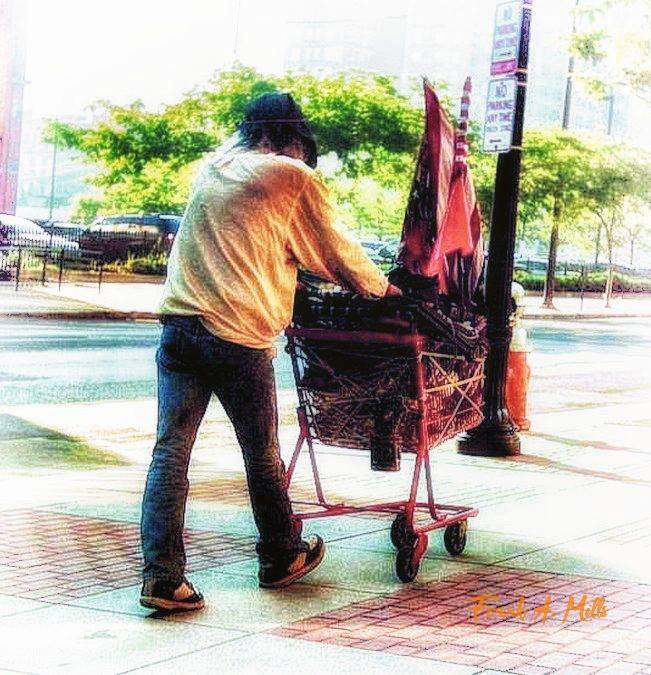
Homelessness & Veterans
Many veterans who are still fighting a war, a war within. They may be back on American soil, but the war is not yet over for them.
Between 2010–2022, the number of veterans experiencing homelessness has dropped by 55.3 percent. However, the number of veterans experiencing homelessness has increased by 7 percent between 2022 and 2023.
On a single day in January (2023) ...
35,574 veterans were experiencing homelessness.
20,076 veterans were sheltered, while 15,507 veterans were unsheltered.
Most veterans (98 percent) experience homelessness as individuals. Of those individuals, 30 percent had experienced chronic patterns of homelessness.
87.8 percent (31,231 veterans) were men, while 11.2 percent (3,980 veterans) were women.
Why Do Veterans Experience Homelessness?
Veterans must navigate the lack of affordable housing and economic hardship that everyone faces in addition to the challenges brought on by multiple and extended deployments, as well as the mental damage war itself can cause. These difficulties and factors together create a population of veterans who through no fault of their own struggle with–housing stability, often made even harder with wars toll on the mind and body—bodily injury, traumatic brain injury and post-traumatic stress disorder.
Research indicates that those who served in the late Vietnam and post-Vietnam eras are at the greatest risk of becoming homeless. Even so, veterans from our more recent wars and conflicts are also affected.
Ending Veteran Homelessness
In 2015 the SSVF program helped nearly 100,000 veterans and about 35,000 children remain in their homes or quickly exit homelessness. n 2019, the HUD-VASH program was able to house more than 11,000 veterans. Numerous similar programs play an important role in addressing veteran homelessness. These include programs that address outreach to veterans, employment, transitional housing, and substance use treatment.
As of November 2022, 83 communities and the entire states of Connecticut, Delaware, and Virginia have effectively ended homelessness among veterans.
As wonderful as this is, there is still a long way to go before veteran homelessness will disappear. Like the 83 communities have done, all communities need a system in place that provides every veteran who becomes homeless with a temporary place to stay and an organization that can arrange for permanent housing and other needed services.
Source:
1. National Alliance to End Homelessness