WORDS + IMAGES

The Hardware Store
(An Ongoing Series with New Images & Stories to be Added)
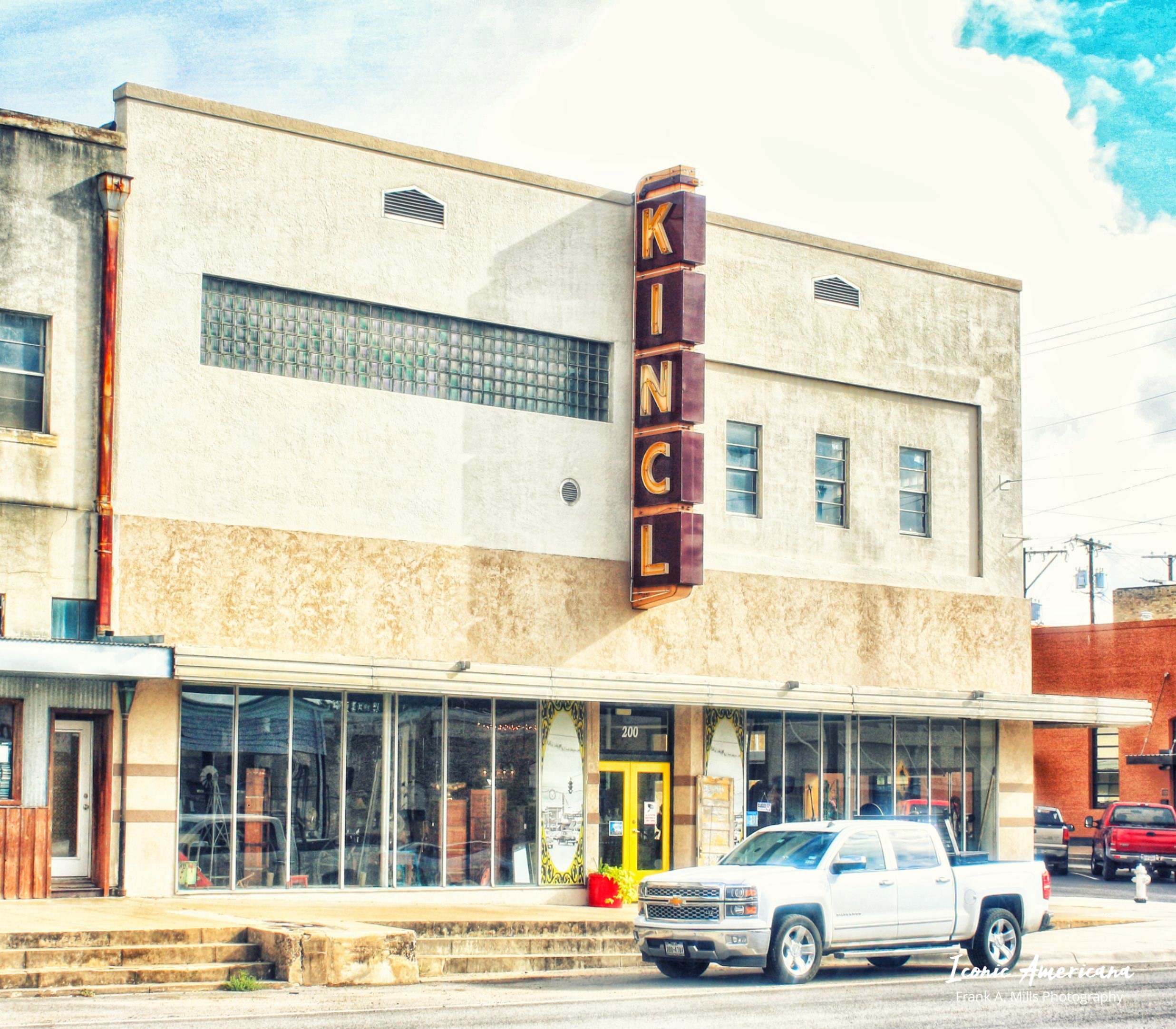
Kincl Hardware
Taylor, Texas
Not every old-time hardware lives on (1924 - ca.2010).
Now an antique store.
What could be more iconic America than the old neighborhood hardware store? Narrow aisles bustling with stuff, wooden shelf doors hiding treasures, an unmarked cardboard box or two calling you peek inside. Some might disagree, but each hardware store eludes its own unique potpourri of smells.
My love affair with the old hardware store – the new ones do nothing for me – began as a child when I would tag along with my father. I hope I have instilled the same love into my children. I think so.
When my children were young and we had purchased a large home in need of work, the neighborhood hardware store was my salvation. One day, picking some needed piece of pipe or something. I happened to notice, hidden on a corner wall, a faded sign: “Lionel Train Repairs.” Asking about it I was ushered into the store cellar, taken to a far dingy corner—Lionel parts and pieces covered with spiderwebs sat on shelves above a cluttered work bench. “My dad when he owned the store and was alive, back in the early 40s got into the train repair business. Just about any brand,” the son and current owner told me. “That was my dad. I have no interest in toy trains.”
It’s that memory that makes me look in the dark corners of the hardware store, hoping that I will stumble upon a treasure trove of toy trains. Unlike that hardware store owner of years ago, I like toy trains.
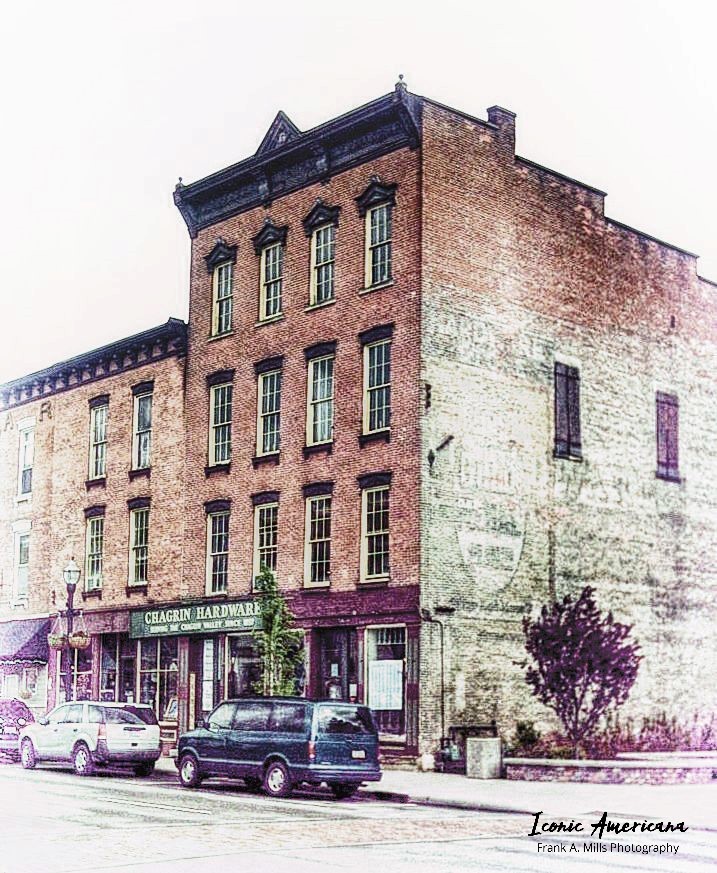
Chagrin Hardware | Chagrin Falls, Ohio
Chagrin Hardware
Chagrin Falls, Ohio
Standing on the bridge over the Chagrin River. I turned to stare at the ghost sign on the side of the building, trying to make out what it once said. A bit hard to do, not only because it was faded, but also because there were layers of over-painting. Each time a major line was added, each time the store changed names (and it did so many times) it was incorporated into the sign. I saw “hardware” and “coal.” I think I saw the word “auto,” but I can’t be sure.
Chagrin Hardware has a colorful history of owners coming and going, and new lines being added and removed as the owners came and went. At different points in time, it sold coal, automobiles (1911 -1920), and Harley-Davidson motorcycles (1913 - 1920). Pumped gas, curbside, and repaired automobiles. In 1940 home appliances were added to the inventory. And in 1965, with again, a change of owners, a portion of the store was allocated for antiques. The “new” owners, Ken and Jean Shutts, still operate Chagrin Hardware.
The original store, founded by Daniel Nettleton (“Nettleton’s”), opened 1857, after Nettleton purchased land along the Chargin River and constructed the store. The building is three-stories, the first two housing the business, the third floor served as a Masonic Lodge. Several owners and name changes later we have the store pictured in the image—Still three-stories and not much changed in look.
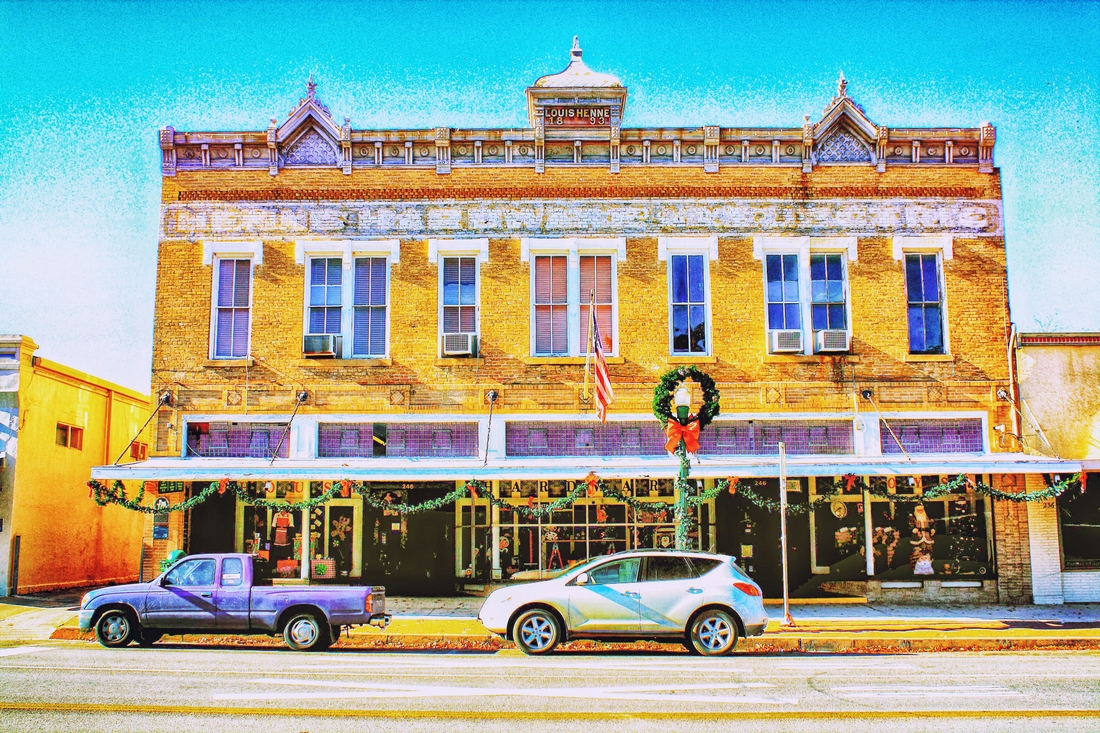
Henne Hardware
Texas’ oldest Hardware Store in continuous operation
New Braunfels, Texas
Henne Hardware
New Braunfels, Texas
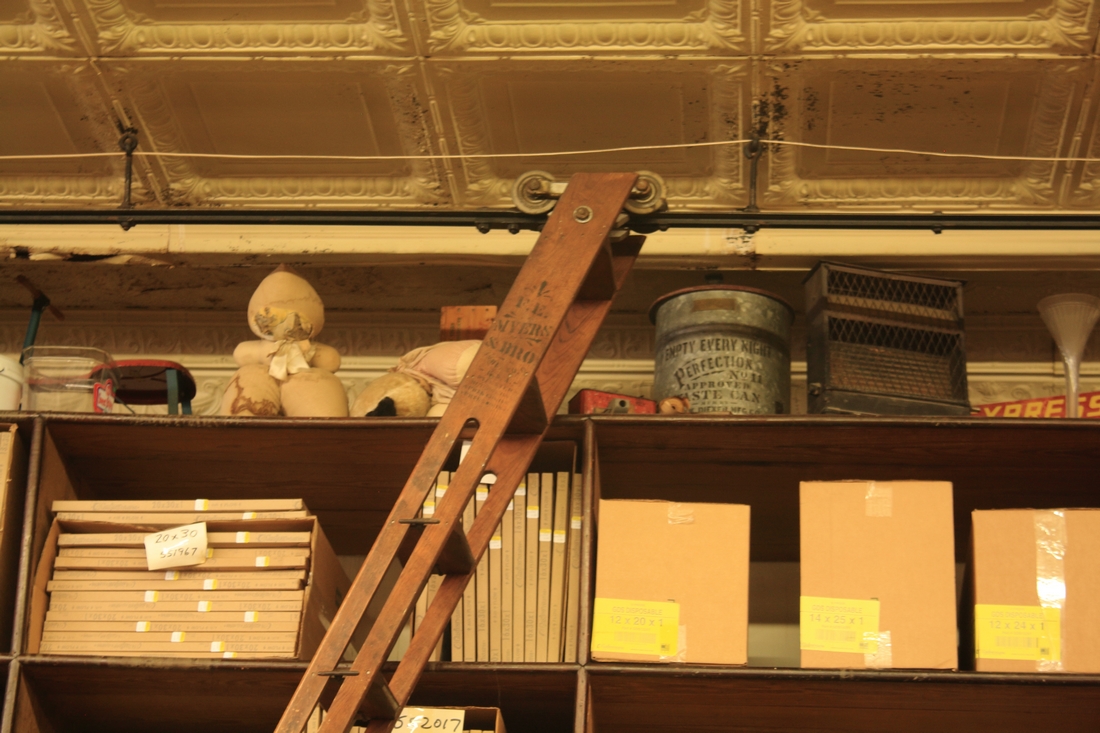
I remember the first time I entered Henne Hardware. It still looked just about as I would think a hardware store in late 1800s would look. There is much to be seen, and not all of it has to do with hardware. "Trolleys" to move money. A cellar well in case of Indian attack. Henne Hardware, the oldest continually operating hardware store in Texas, opened its doors to its first customers in 1857. It didn’t start as a hardware, but rather a tinsmithing shop run by Johann Henne, a German immigrant. Henne began his tinsmithing business shortly after he immigrated to New Braunfels in 1845, via Galveston. Henne paid $120 for the parcel of land on San Antonio St., where the hardware store stands today. In the late 1800s, before their local banks, the store served as a bank for locals. Still existing in the store are the “trolleys” used to carry money from the counter to a large safe in the rear of the store. Some other notable features about the store are lockable display cases and nail bins, dating back to those early days when merchandise needed to be under lock and key to prevent theft. The building also features a small basement where card games were hosted. There is also spring well in the basement, which if you ask nice you might get to see. Supposedly to provide water during Indian attacks.
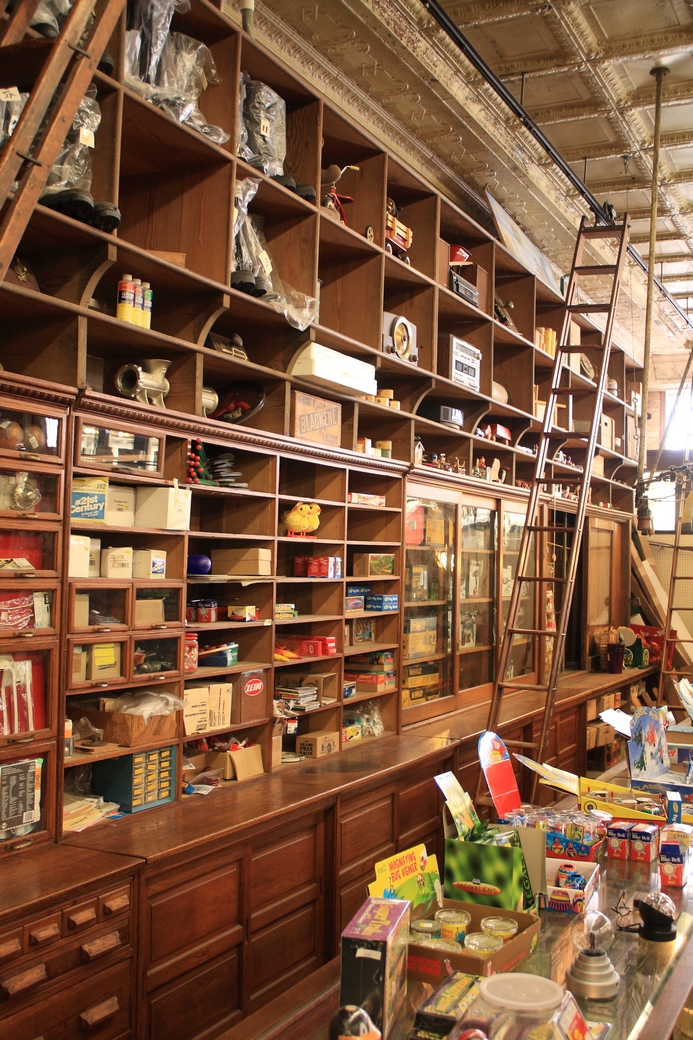
Henne Hardware
New Braunfels, Texas
What is above is based on my visit, and a bit of digging into history. In May of 2023, the store came under new ownership. While hardware is still sold, the store has expanded to sell more household goods and boutique gift items. Whether it will remain the same, remains to be seen. The new owners, a husband and wife team, say it will, and some of that which has been lost, will be restored.
Henne Hardware
New Braunfels, Texas
Back to Iconic Americana