WORDS + IMAGES

The Drummer
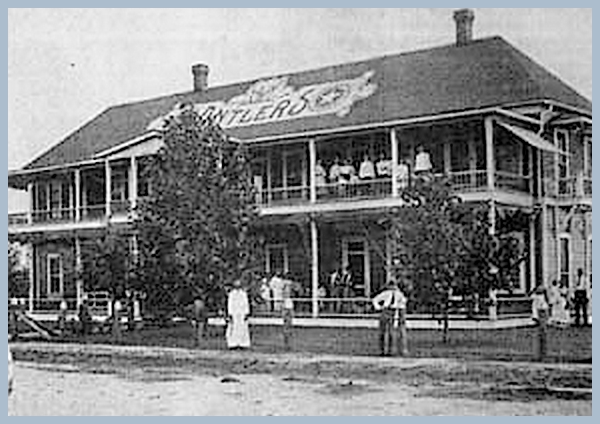
Antlers Hotel ca. 1910 (scanned from old copy of photo, source/photographer unknown)
It’s 1910.
The drummer* stepped off the westbound Austin & Northwestern train onto the wet wooden platform, a carpetbag in one hand, a leather-sheathed cardboard sample case in the other, wishing he had booked another night in Austin at the Depot Hotel. He was glad it was only sprinkling when he walked the few blocks from his hotel to Austin’s Union Station. With a sigh he set both down, pulled his coat tighter around him in a useless attempt to set off the bone-chilling dampness of the evening. If it weren’t for the rain – a downpour of the kind seemingly known only to Central Texas – and a washed out bridge a few miles up the line, he’d be spending the night in Llano at the Dabbs where he had reserved a room. Picking up his bags he fell in with his fellow passengers, all but a few, stranded like himself, toward the large hotel across the tracks.
Stepping across the wide porch and into the lobby damp from both the elements and dripping clothes, the drummer made his way to the front desk to see about a room. Before a word was out of his mouth, the clerk shook his head, “Sorry not a room in the house, nor one in any of the cabins. The best I can do for you is a hammock on the upstairs porch, if that will do? At least some shelter from the rain if not the dampness.”
“Is there nowhere else where I might seek lodging?” the drummer asked. “Sorry, my friend, the Antlers’ upstairs porch it is, unless you can find someone out there in a tent to take you in.” Resigned to a restless, if not sleepless night, the drummer reached into his coat pocket to extract his money, “How much?” he asks.
Unnoticed by the drummer, another had debarked, and followed the drummer into the lobby. This fellow, like the drummer, had caught the train in Austin, although Kingsville and the Antlers, not Llano, was his destination. Without hesitation, this rather dapper fellow moves through the lobby, out the rear door, hat pulled down tight over his head to ward off the rain, and makes for a set of step stairs at the rear of the hotel, ultimately making his way into the room at the bottom of stairs. Taking off his coat, shaking off the rain as he did so, he turned to the Negro by the door.
“Good evening ... a busy night I see.”
“Yes sir, the rain sees to it. Whiskey, sir?”
“Yes, please, thank you.”
Turning from the porter, he silently surveys the room looking closely at the faces.
“Fancy a game of cards?” he asks the drummer.

The Antlers Hotel — Kingsland, Texas
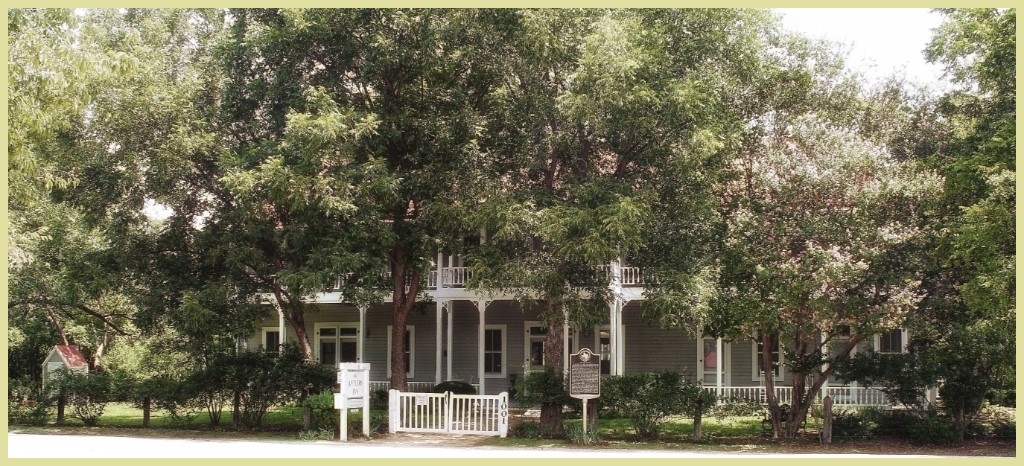
Front of Antlers Hotel (August 2012)
The arrival of the Austin & Northwestern (A&NW) was a godsend to the little isolated hamlet of Kingsville, as it was then called. With the rails came commerce, and more importantly, city folk seeking to enjoy the confluence of the Llano and Colorado Rivers. In 1892, the Austin & Northwestern Railroad extended their tracks to Llano to serve the rich granite quarries. In the process, they passed through Kingsville and built a depot and a section-house, along with a bunkhouse for crews across the tracks -- and eight years later a resort, The Antlers.
It is at this depot that our drummer detrained and crossed the tracks to the Antlers Hotel.
The Antlers, built in 1900-01, opening in May of ’01, was one of the grand railroad resort hotels of the era. Built by the Austin & Northwestern RR, the hotel catered to Austinites and other “City Texans” seeking to escape the summer heat for the coolness of the countryside, and maybe to fish and swim in the Colorado R., which flowed just a short walk away. With the railroad running excursion trains from Austin, and advertising heavily, the hotel drew clientele from throughout the Texas, the Midwest and South. And, yes, sometimes the hotel was so full that only accommodation available was a hammock on the porch. The rear basement, the “dapper gentleman’s” destination, featured a single chair barber shop and a gaming room. Rumor has it, that an enquiring gentleman could possibly employ with a tip to the bartender or porter the company of a lady. Whether our drummer did so, we will never know. More than likely, the “dapper gentleman” did.
The hotel, featuring gas lightening throughout and a lobby phone, was situated on the peninsula were the Llano and Colorado Rivers met, and oriented to capture the breeze that blew off the water. The structure itself was L-shaped, one room wide, surrounded by lower and upper porches. Every ceiling, including those of the eleven guest rooms, was 12-foot high. Transom windows, large windows, and many doors were situated to move the breeze through the hotel. Porches and balconies were lined with chairs and, often, hammocks. The hammocks not only accommodated the overflow, but also quests to sleep outside when their rooms became too stuffy during the hot Texas Hill Country summers.
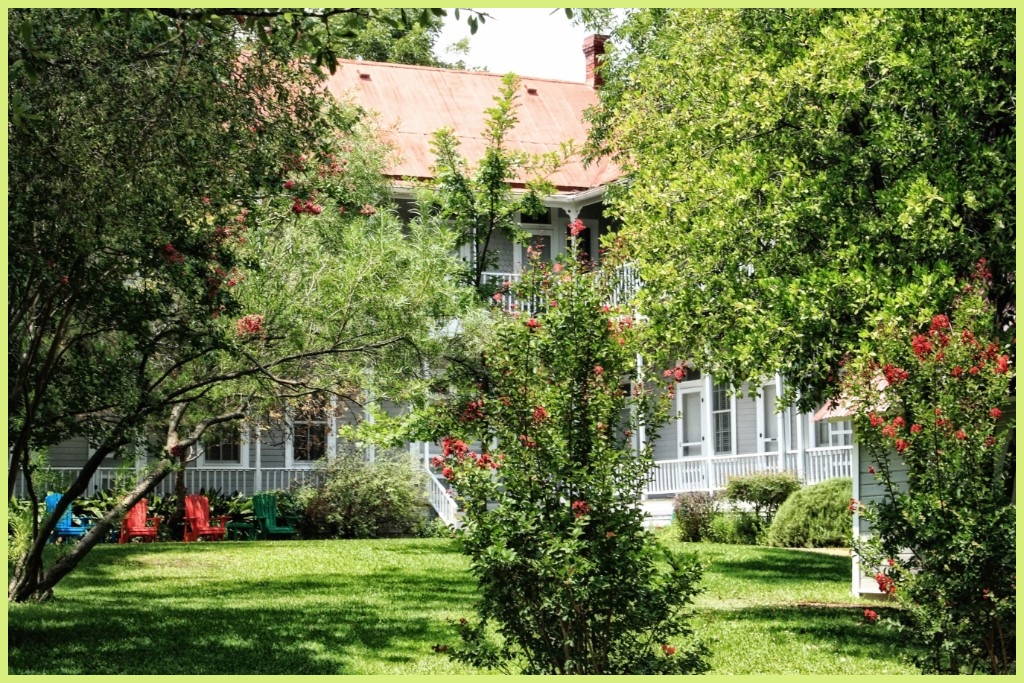
Rear of antlers Hotel (2012)
Just beyond here were where the campgrounds and cabins were located.
This portion of the resort faced the Colorado R.
Situated behind the hotel was “Camp Pajama,” a campground with cabins and tents alongside the Colorado R., hence the clerk’s suggestion of finding a camper to take our drummer in. Another phone was placed in the campground allowing for campers to order meals and then pick them up from the hotel kitchen.
The Antlers remained popular until 1922, when a fire destroyed much of Kingsland. The depot was engulfed, as was the section master’s home and a large Chautauqua-like wooden pavilion for dances and community gatherings. Fortunately, The Antlers was spared.
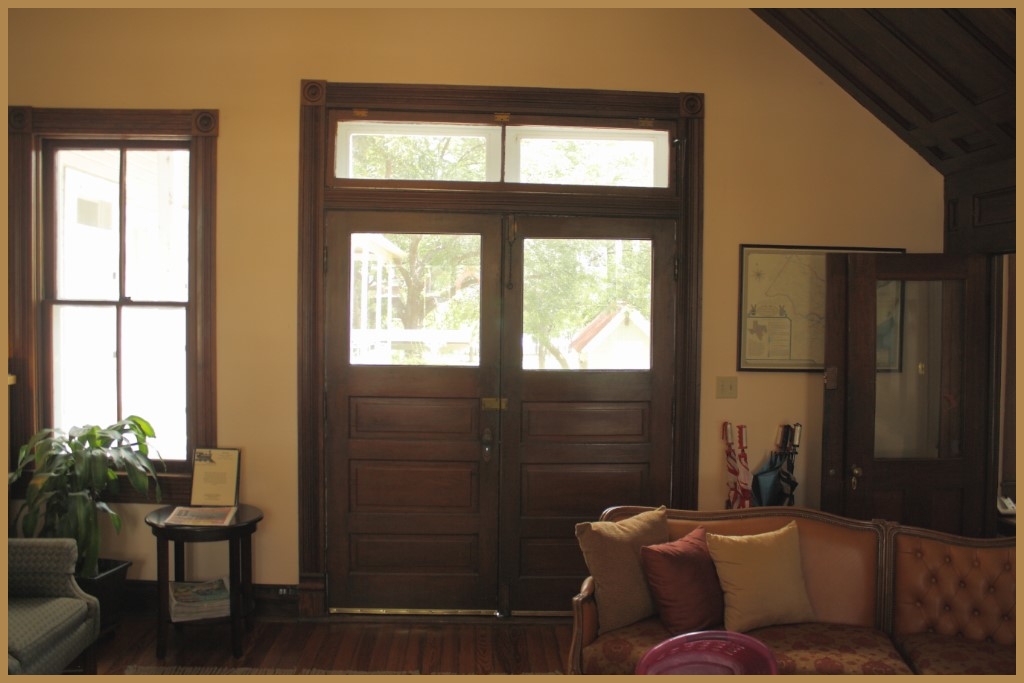
Antlers Hotel Lobby
Looking toward rear entrance
(August 2012)
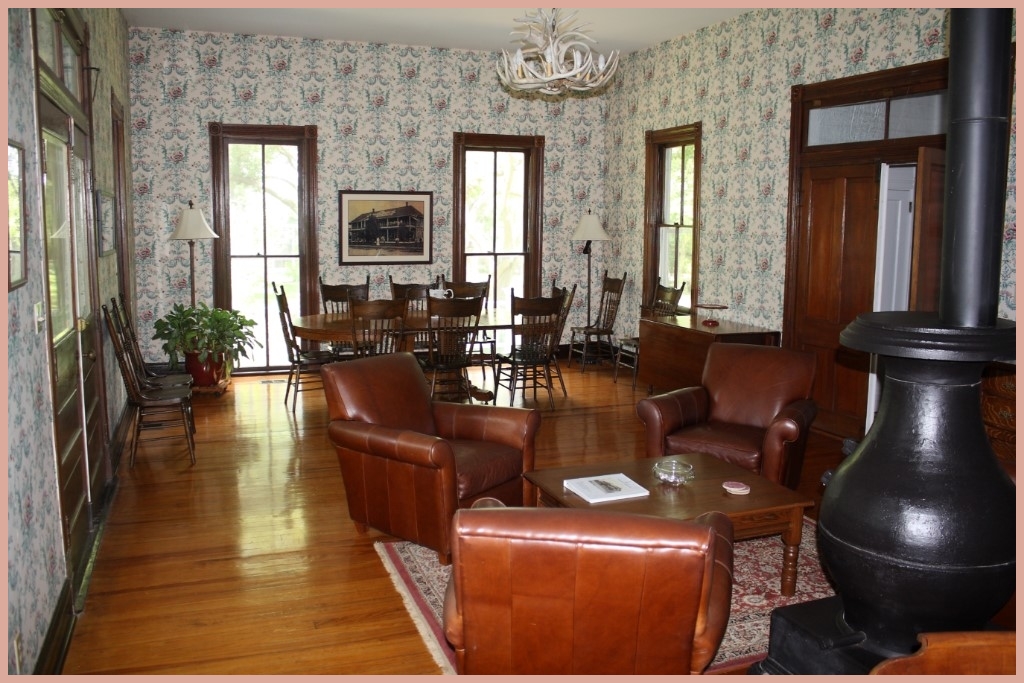
Antlers Dining Room
Just beyond the right side wall was the kitchen hall where campers would pick up their meals.
(August 2012)
Along with Kingsland, after the fire, The Antlers rapidly declined. Adding to the decline was the growing popularity of the automobile and the grading of highways. In 1923, an Austin family purchased the resort to use as a personal family retreat; remaining in the family for 70 years.
In 1993, Barbara and Dennis Thomas purchased the hotel and undertook a two-and-a-half-year renovation project. During that time, they purchased several cabooses for lodging, and the Muldoon (Texas) Depot, which was relocated to the resort. The Antlers reopened as a hotel on Sept. 1, 1996. The old railroad crew bunkhouse next to the hotel proving additional rooms.
Today, under the 2015 ownership of Rick Gregory and Drew Gerencer, the hotel remains pretty much as it was when it was built. The original pine floors have been refinished. Most of the original glass, with its wavy imperfections, is still extent. And the vertigo inducing balcony floors still slope.
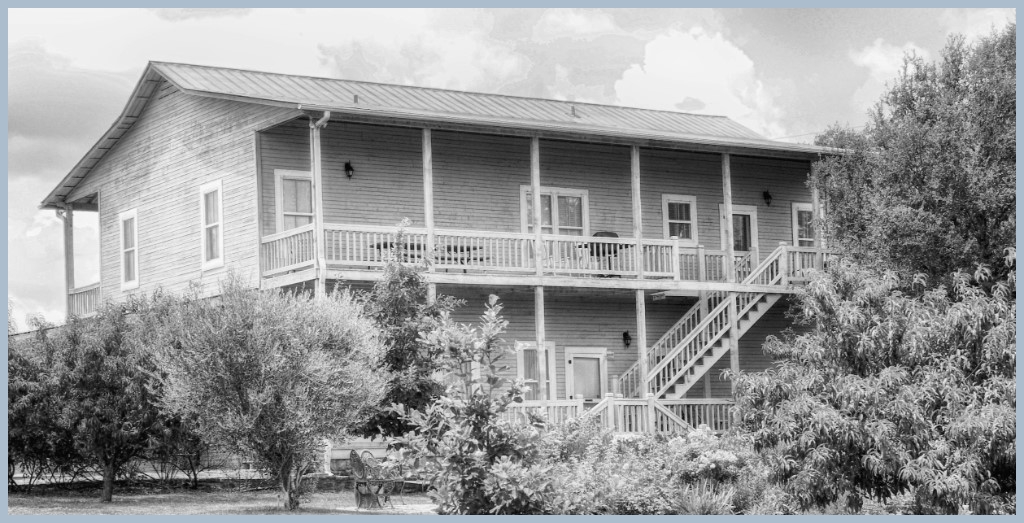
The upstairs of this building was used for hotel staff. The hotel manager’s family had their own home. There was also (I am told) a separate home for the A&NW President. The train crews received their meals from the hotel kitchen. (August 2012)
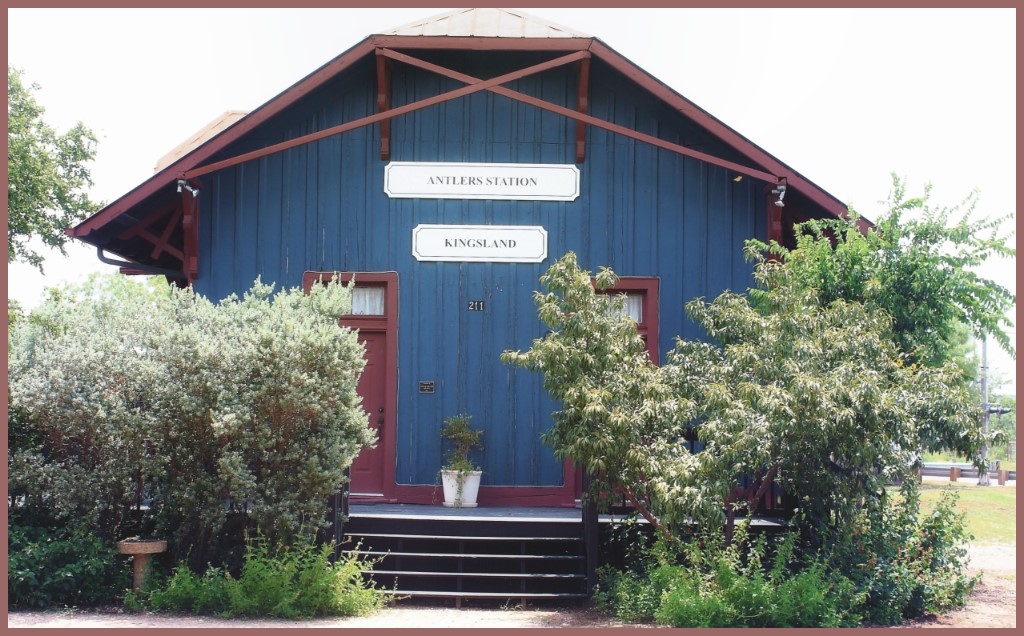
Muldoon Depot
The original depot burned in the Kingsland fire. In 1993 purchased the Muldoon (TX) depot and moved it to Kingsland.
At the same time, three cabooses were also purchased and set in place. (August 2012)
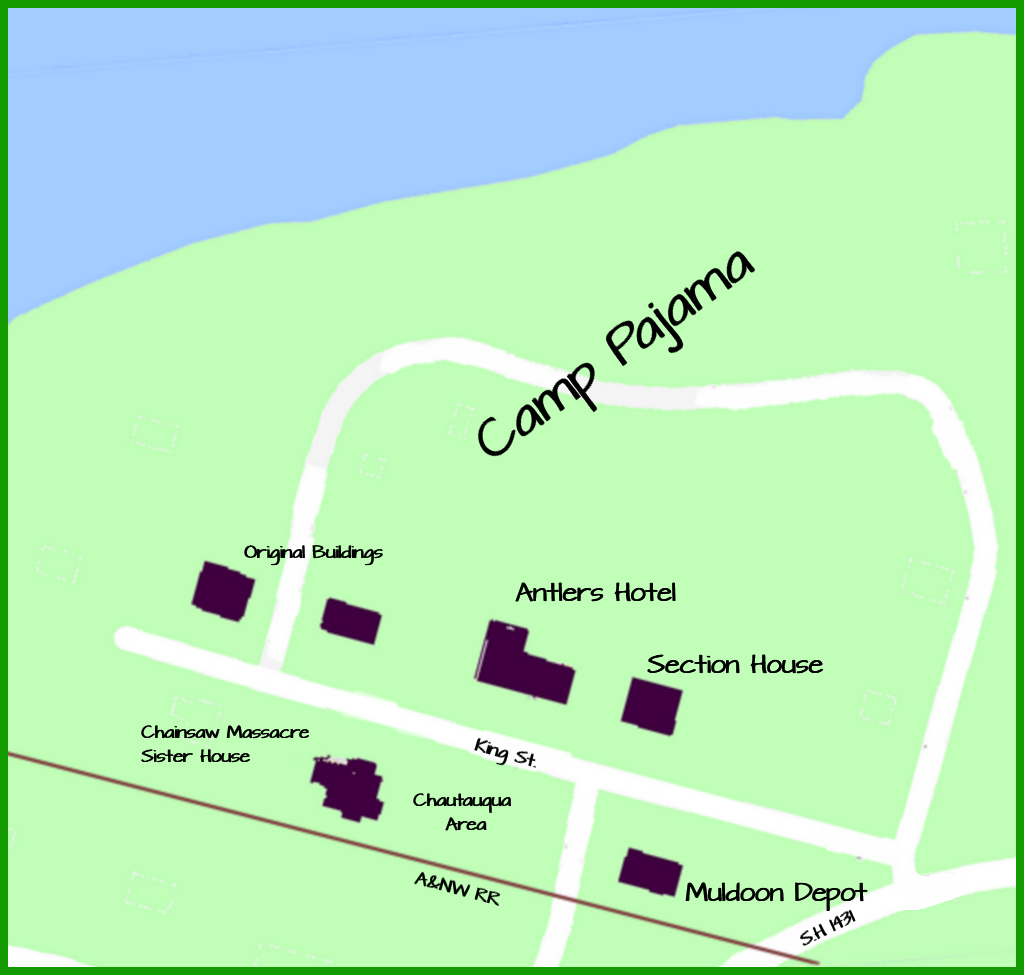
Shows location of Antlers Hotel, Section House and Camp Pajama (plus Muldoon Depot and Chainsaw Massacre “Sister House.” This last was moved to the complex.)
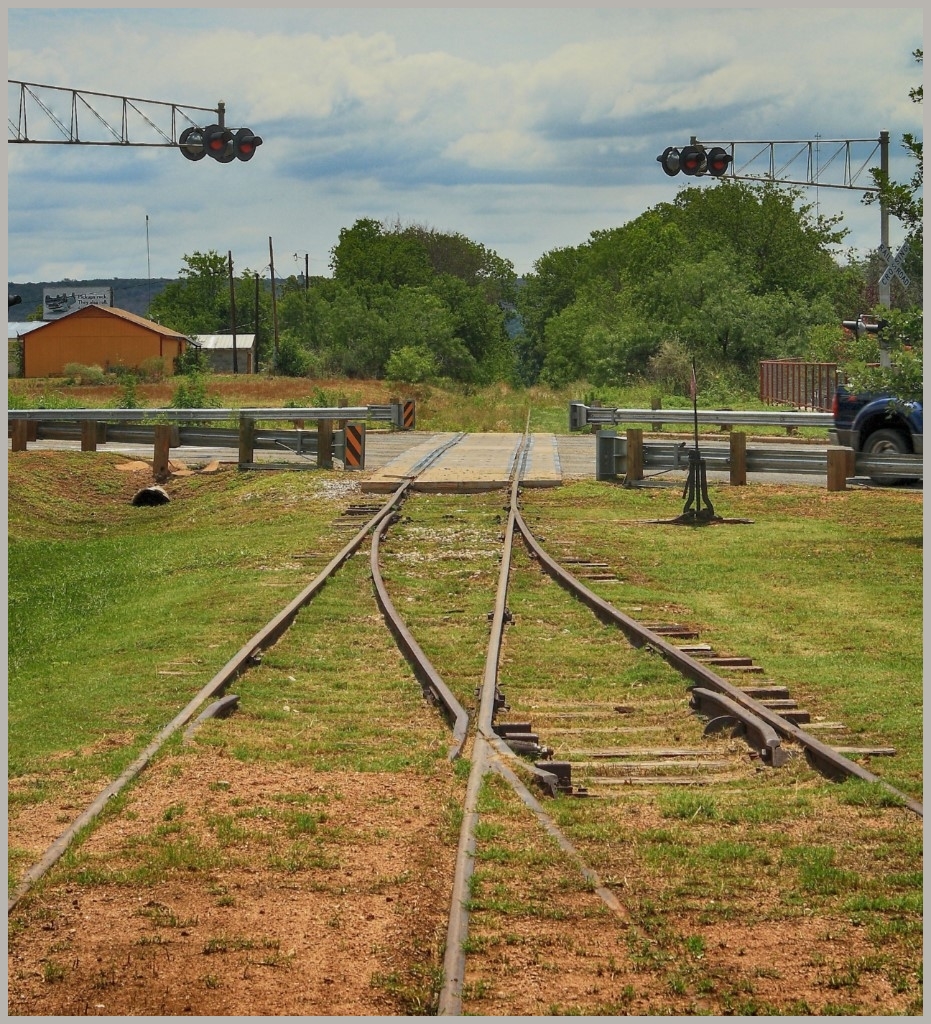
The tracks through Kingsland. The depot would have been on the west side of the tracks. There were a number of buildings along the tracks before the fire. (August 2012)
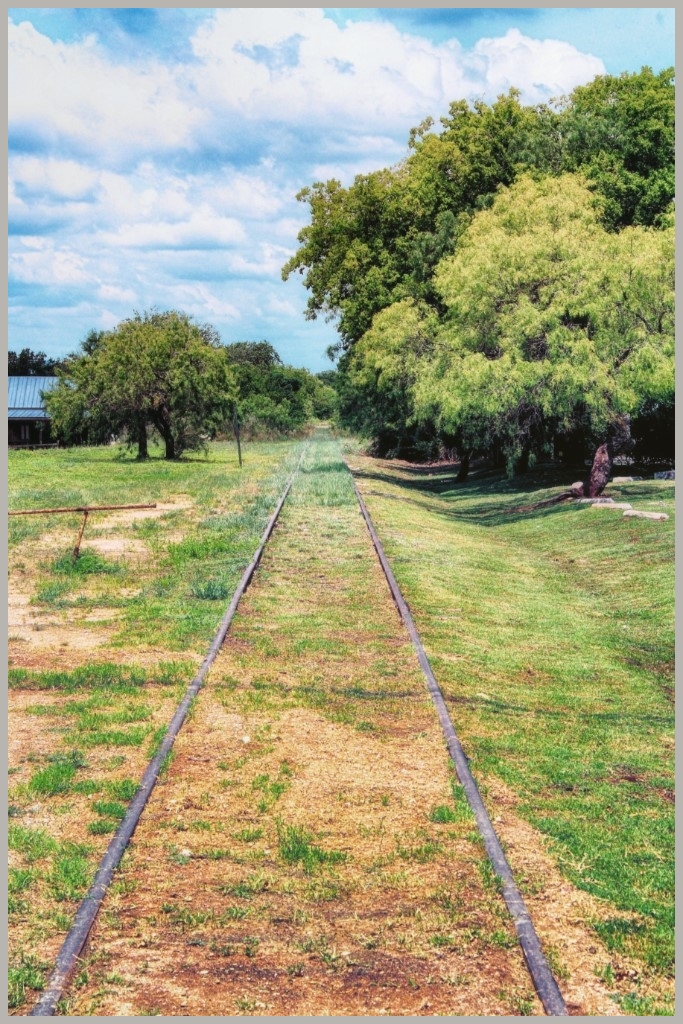
The right-of-way leaving the original small Kingsland yard and Antlers Hotel. (August 2012)
Dabbs Hotel — Llano, Texas
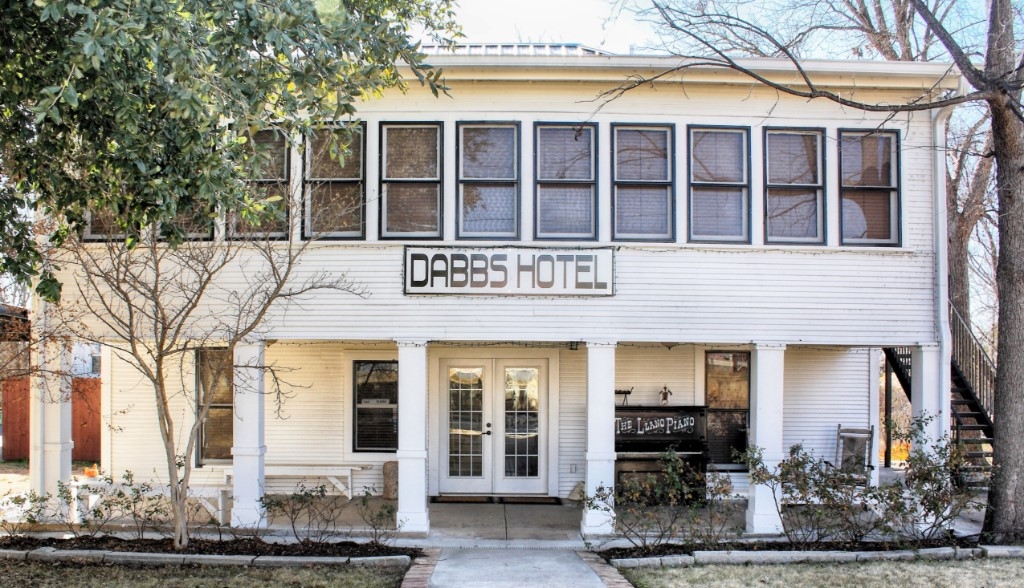
The Dabbs Hotel (August 2014)
If our drummer’s train had not been halted by the rain and a washed-out bridge, he would have spent the night at the Dabbs Hotel in Llano (where he had a reservation), just across from the Llano depot. Built in 1907, the Dabbs was one of the many hotels lining the Llano River. Most of them served railroad travelers, fishermen, and hunters, but the Dabbs in particular, located next to the depot and rail yard, also served A&NW train crews. The fact that our drummer was planning to stay there indicates his relative lack of finances. (We can only hope that he stayed away from the cards at the Antlers.) A much better hotel was just up the street, the elegant Algona.
Llano was the end of the rail, on the edge of the Texas Hill Country wilderness. To travel further west to sell his wares our drummer would require passage on a coach line. At the time Llano was as bustling frontier community, known as the “City of Crystal, “reaping the benefits of the crystal-rich Granite Highlands.
Had our drummer made it to the Dabbs, he might have run into Bonnie & Clyde, who were said to favor the Dabbs when in Llano. Not only Bonnie & Clyde, the Dabbs has a rich heritage of being “home” for a night or two, not only to rail workers and drummers, but also to bank and train robbers, lawmen and killers, prospectors and miners, itinerant musicians and poets, patent medicine men and quacks. For a short while it was both a hotel and bordello simultaneously.
The Dabbs’ location was almost perfect: Across from the depot and rail yards, not far from the town center and saloons, and sitting on a bluff overlooking the clear Llano River, with even a spot to bathe if one desired to do so. The hotel itself was a simple rectangle, two-story building with six rooms and an upstairs “sleeping porch,” along with a back porch overlooking the Llano R.
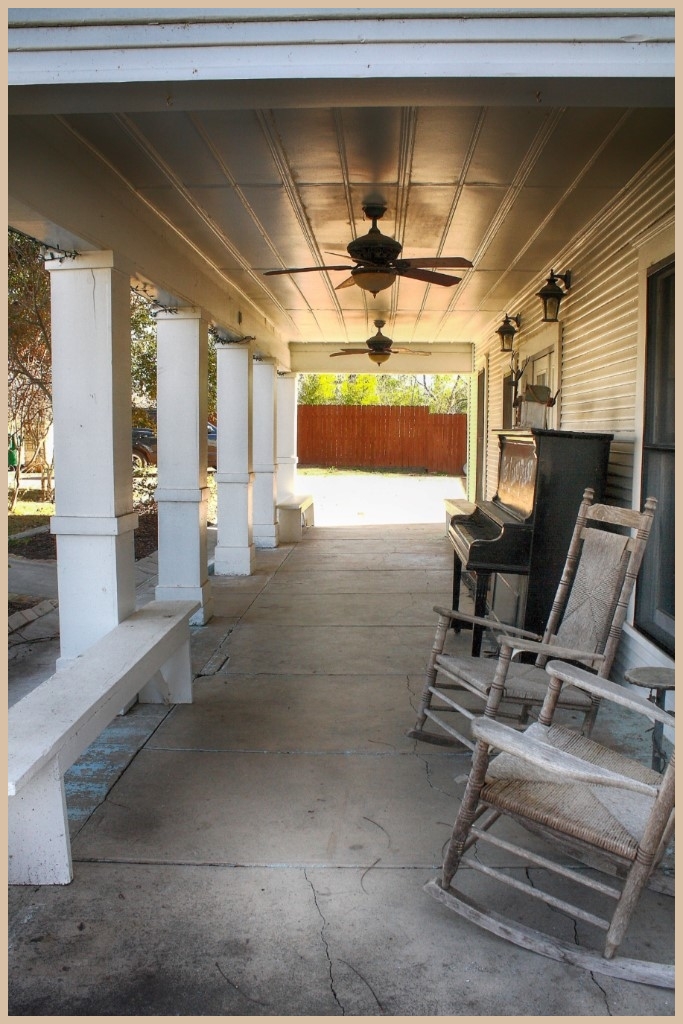
The Dabbs Hotel – Back First Floor Porch (August 2014)
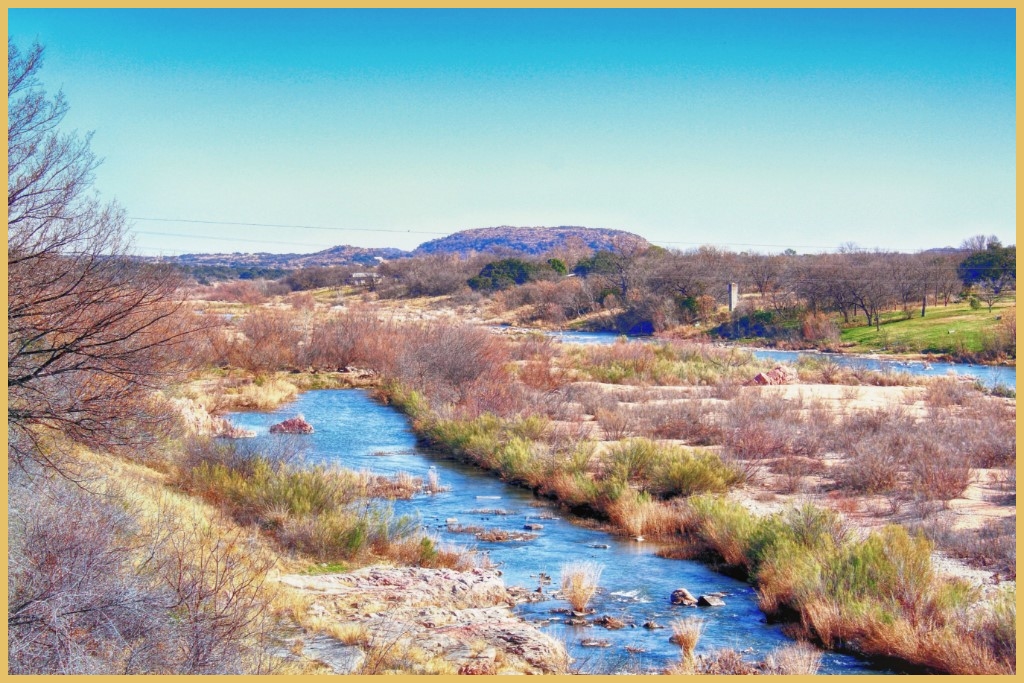
The Dabbs Hotel – The view from the back porch (August 2014)
Today, although a train rarely makes it into Llano these days, the Dabbs Hotel sits proudly as the last of Llano’s riverfront hotels and her last extant railroad hotel. Currently it functions as a bed & breakfast.
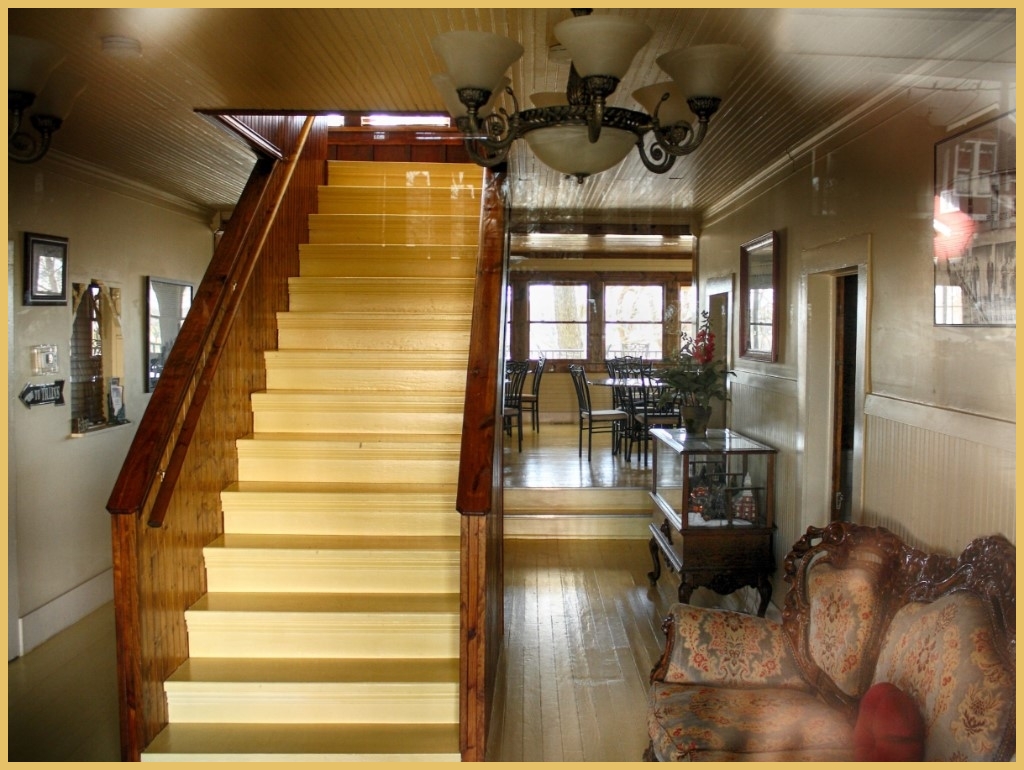
The Dabbs Hotel – Hallway & Stairway to Bedrooms & Sleeping Porch (August 2014)
Once a busy terminus, the Llano end of the Austin & Northwestern barely exists today. Generally, the only movement over the line from Fairland Junction is a speedster run by a group pf speedster owners, although the current operator makes sounds now and them about reviving the section. The Austin Streamtrain also mentions how nice it would be to run their trains all the way to Llano, something, naturally, the Llano Chamber of Commerce would love to see happen. The expense of upgrading tracks and bridges would be considerable.
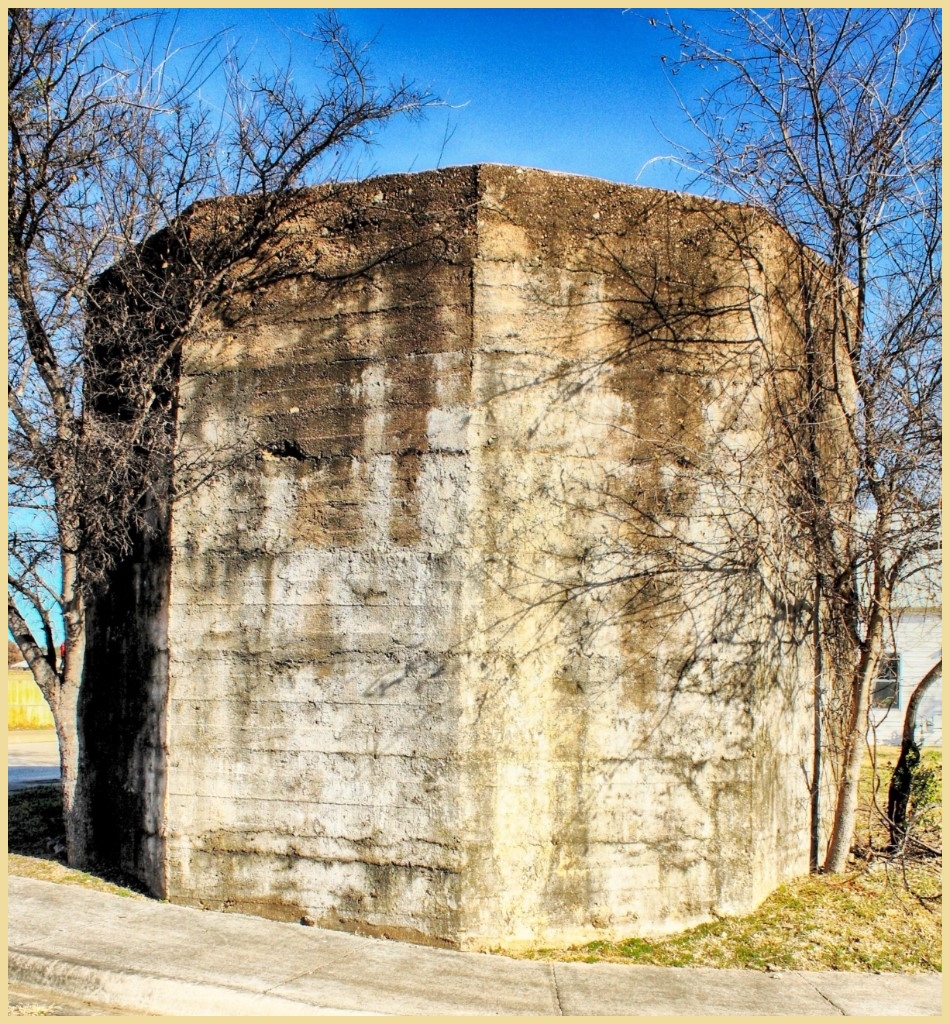
Remains of Engine Water Tank (August 2014)
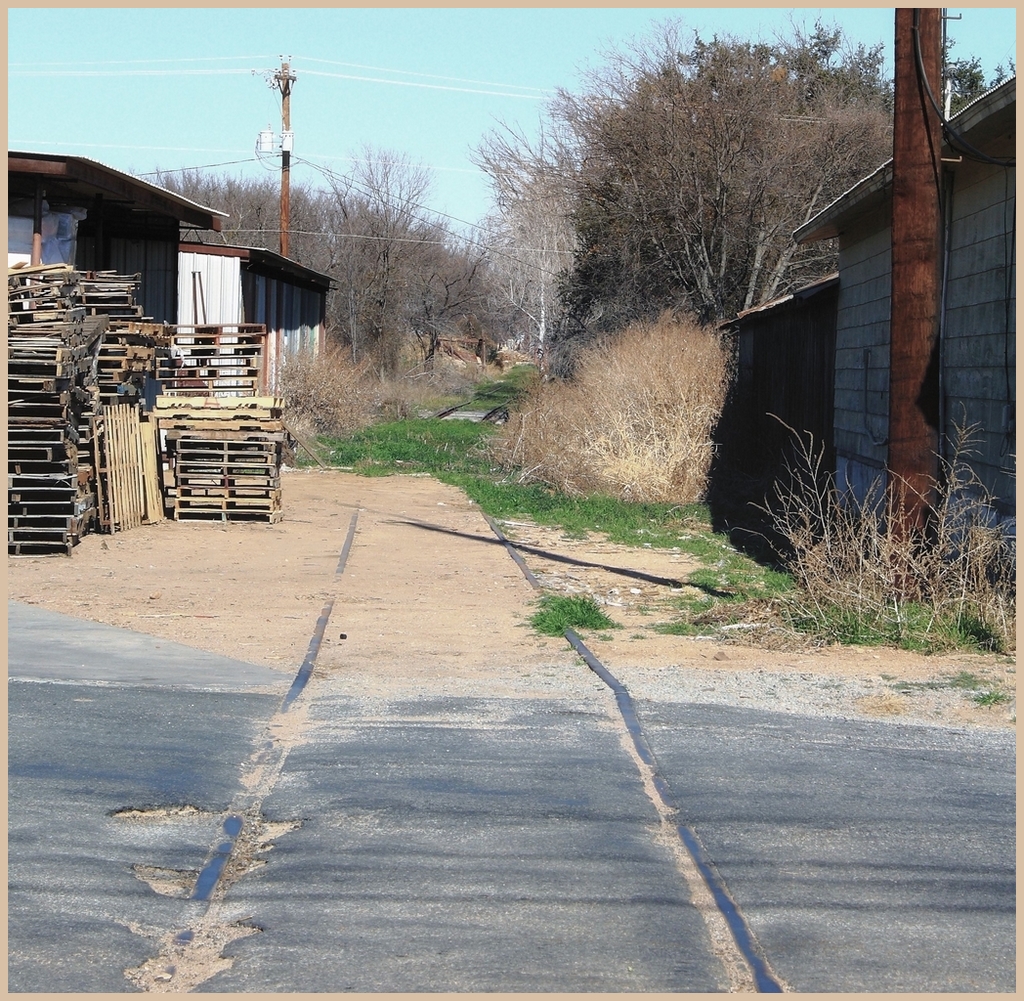
Siding to Lumber Yard & Hardware, Feed & Supply Store (August 2014)
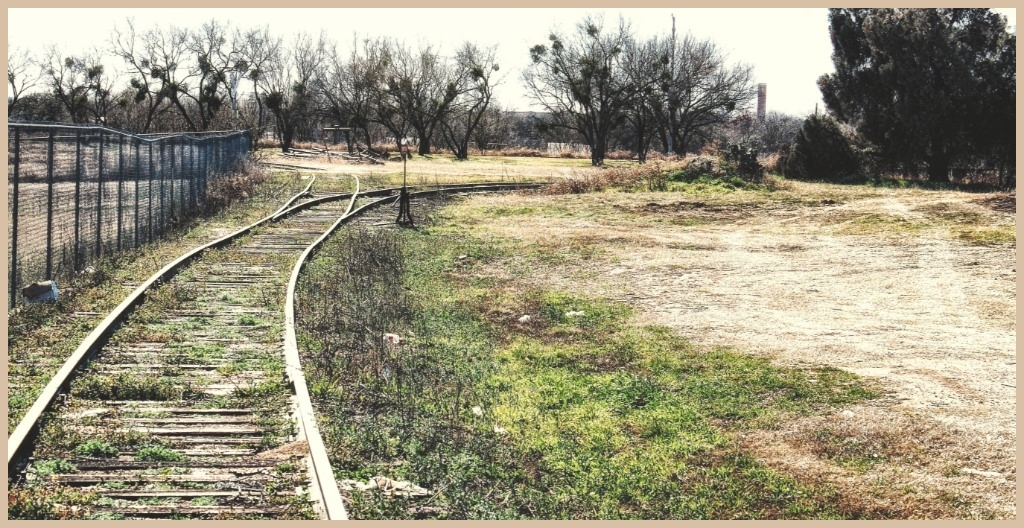
Turning Wye (August 2014)
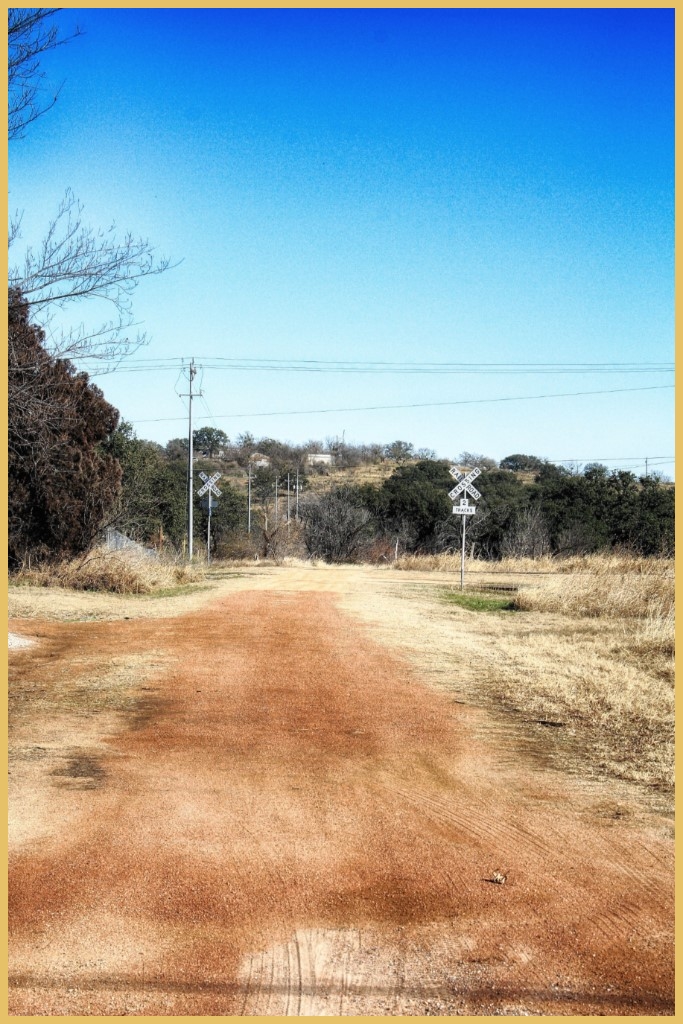
Former Rail Yards. Most of the track has been removed. There are a few spurs occupied by old equipment (August 2014)
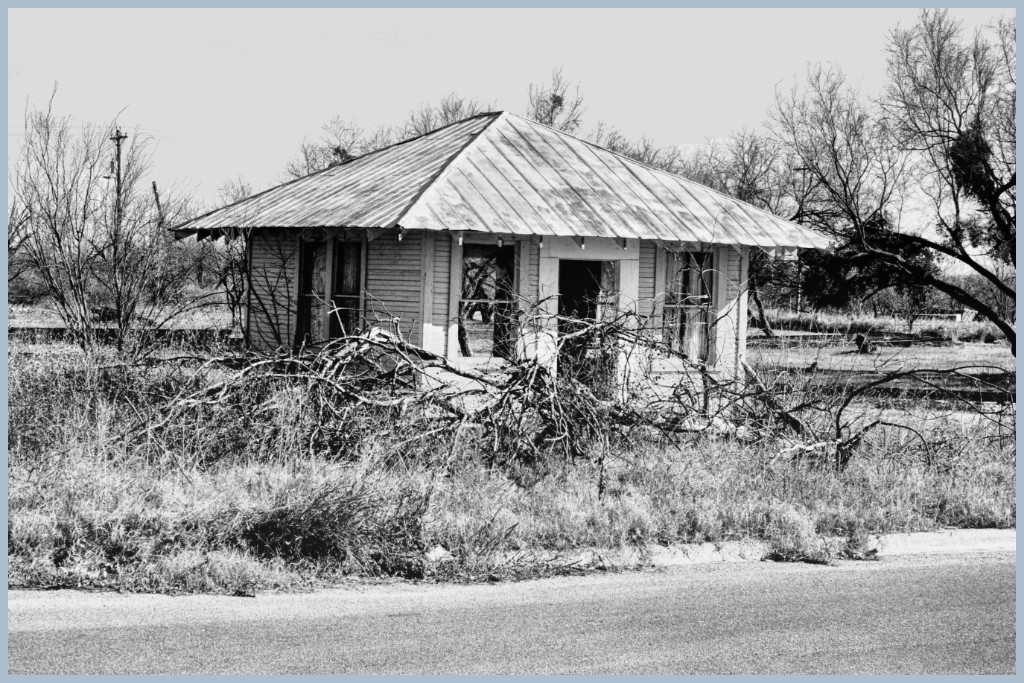
Former "Section Hand" building (?), Adjacent to turning wye (August 2014)
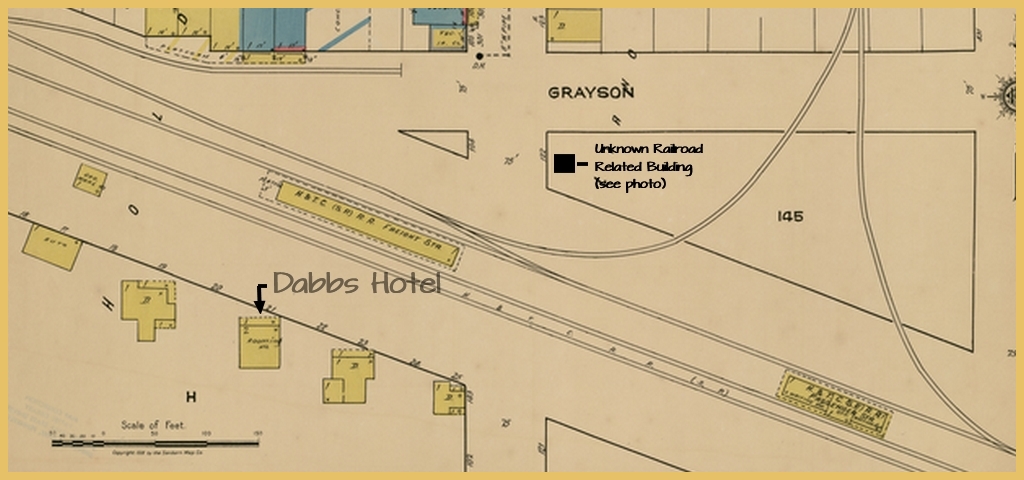
1901 Sanborn Fire Map of Llano yard & depot area with Dabbbs Hotel marked in.
Depot Hotel — Austin, Texas
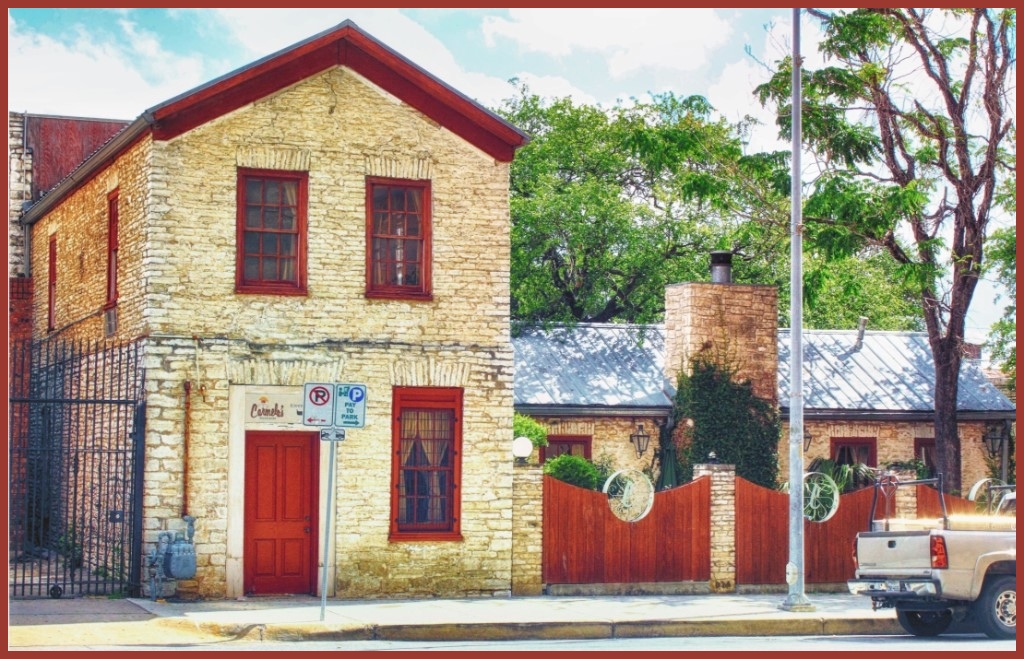
Our drummer arrived in Austin from Houston via the Houston & Texas Central Railroad. Needing a place to stay before heading west on the Austin & Northwestern Railroad, it is only natural that he would head over to the Depot Hotel on 5th St., just a few blocks east from Union station (H&TC, A&NW, I&GN). It was here that many drummers resided when in Austin, sharing stories and perhaps a bottle. [The old Union Station has long since made way for downtown development.] When built in the early 1870s the hotel was just a block from the old depot between San Jacinto and Trinity Streets.
The Depot Hotel is a rambling stone structure consisting of a large two-story building with an adjoining one-story, two-room wing. Three wings of the building surround an interior courtyard. From the courtyard, a curved stairway leads to the second-floor balcony. Although not as elegant as the Driskill down the street (6th St. & Congress) and a closer to Union Station, the old hotel was considered quite comfortable for its day.
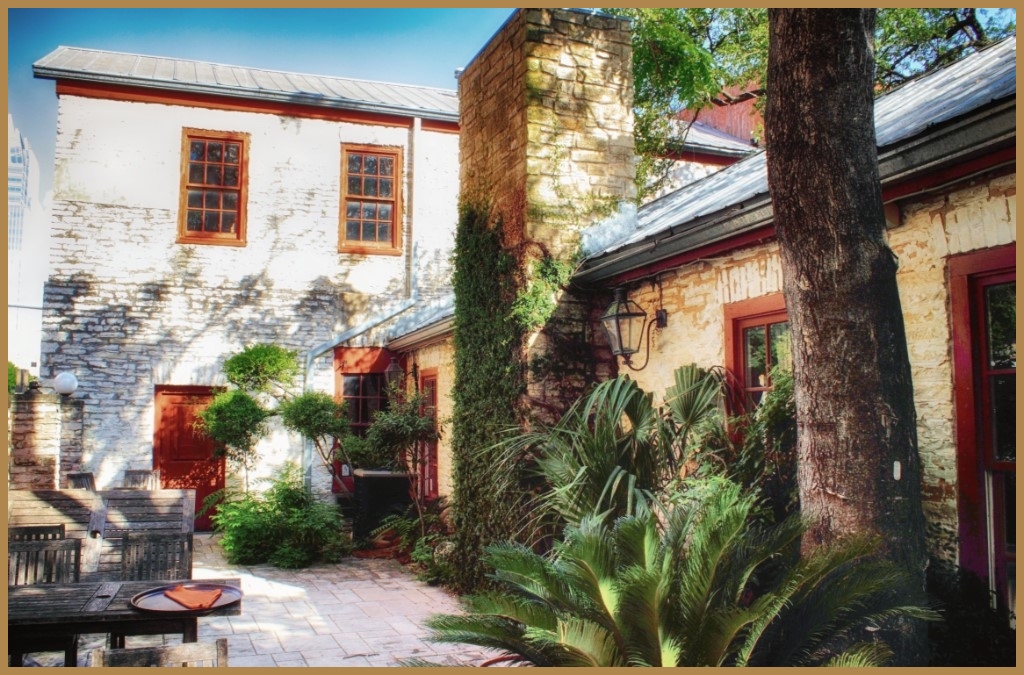
Depot Hotel Current Courtyard as Italian Restaurant (2017)
The hotel known variously as the Depot Hotel, Schaeffer’s Boarding House, and the St. Louis House, began life in 1872 as the Railroad House, which it remained until 1878. The hotel was built by Carl Schaeffer between 1871-1872, on land originally owned by early Austin’s famous architect, Abner Cook. It can be speculated, although with any certainty, that Cook participated in the hotel’s design. The walls are twenty-four inches thick, constructed of locally quarries limestone. When built the hotel served three railroads and four stagecoach lines. Most of the sleeping rooms (I have been told) were on the second-floor.
The hotel was purchased in 1964 by Mr. and Mrs. Glenn Moore Tooke, Jr. Before then it changed hands only rarely, with only one of its owners using it as a residence. After renovation in 1964 the hotel housed a popular Mexican Restaurant, “Mi Casa es Su Casa,” until it was purchased by Carmelo Mauro in 1985 to house “Carmelo’s Ristorante Italiano.” In the summer of 2017, the land which the restaurant sits on was purchased for redevelopment. Carmelo’s closed in Father’s Day, however, the fate of the building is not yet known. As the Depot Hotel is on the National Register (1966), one would assume that at least part of it will be preserved.
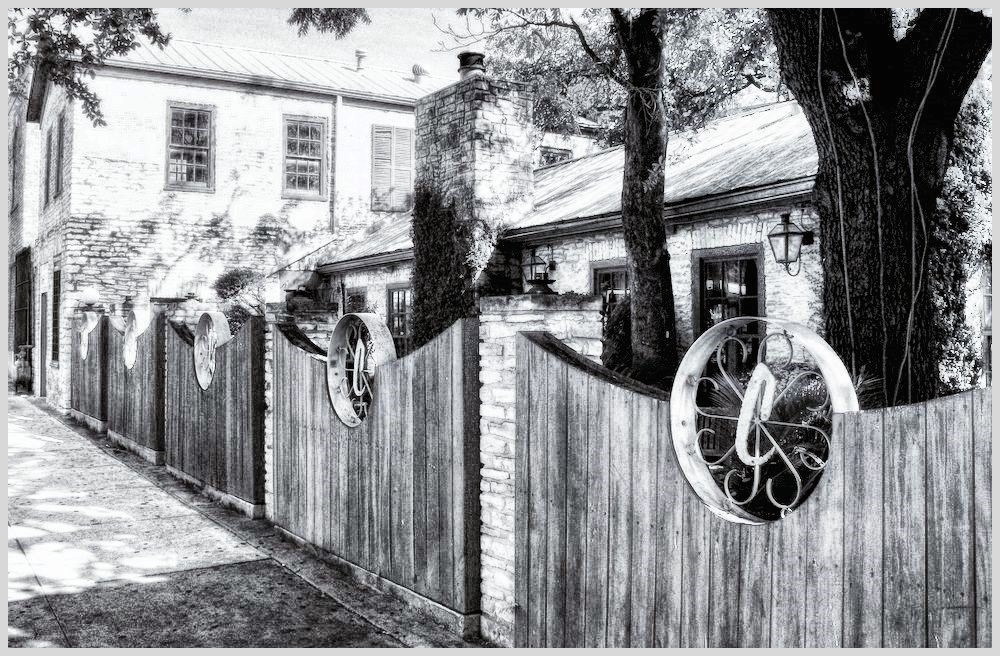
Current Front View as Italian Restaurant, 5th Street (2017)
The Austin & Northwestern Railroad
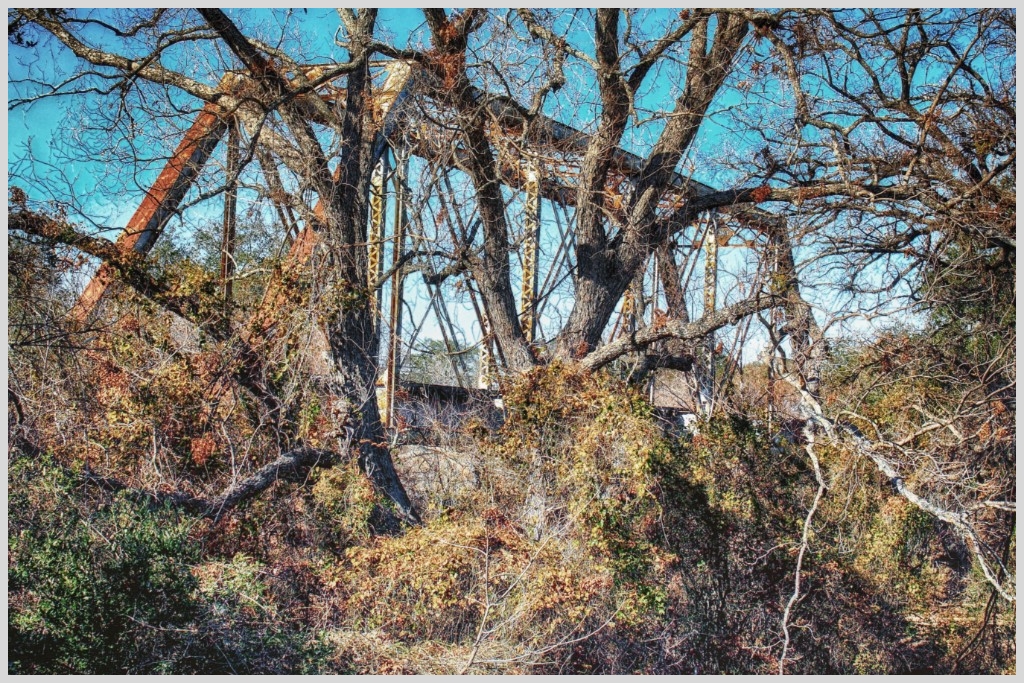
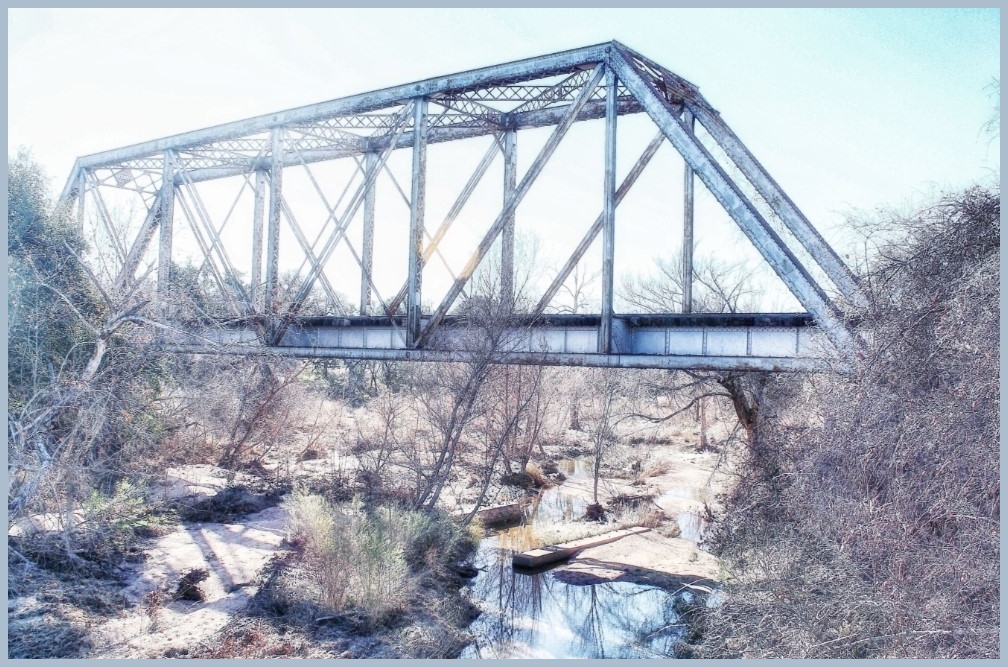
An Austin & northwestern Bridge on a Winter Morning (2017)
The railroad drove the first spike, April 20, 1881, in Austin with the intent of connecting with the Texas & Pacific Railway in Abilene. It however never extended beyond Llano, some seventy-five miles distant, following a rather circuitous route from Austin through Leander, Liberty Hill, Bertram, Burnet (1882), and Kingsland to Llano (1892). There were branches to Granite Mountain (1885) and Marble Falls (1889). The Granite Mountain branch was built to transport pink granite from the mountain to Austin for the new state capital. When first built, the A&NW was built as a 3’ narrow gauge line, but was soon converted to standard gauge. In 1901 the Austin & Northwestern merged with Houston & Texas Central. With the merger, a new Union Terminal was built in Austin and a branch from Burnet to Lampasas (about 22 miles apart) was constructed (1903). With the merger, the A&NW extended east from Austin to Giddings operating over Houston & Texas Central tracks. Later a temporary branch from Rutledge to the Colorado River for the construction of Mansfield Dam (1937). The line was merged into the Texas & New Orleans Railroad in 1934, subsequently into the Southern Pacific. In 1986 the entire 163 mile-long line (Giddings-Llano) was abandoned by the Southern Pacific. At which time the City of Austin purchased the line for $9.3 million. The Austin to Leander portion of the line is used for mass transit (CapMet). Freight service is still operated over the line, although there is little service beyond Elgin to the east of Austin and Marble Falls to the west. The Austin Steam Train Association operated excursion trains between Cedar Park, north of Austin to Burnet. There has been talk of extending some of the excursion trains to at least Kingsland. Today, although currently known as the Austin Western Railroad, to locals the railroad is still the Austin & Northwestern (AWRR).
Same Austin & northwestern Bridge on a Foggy Morning (2017)
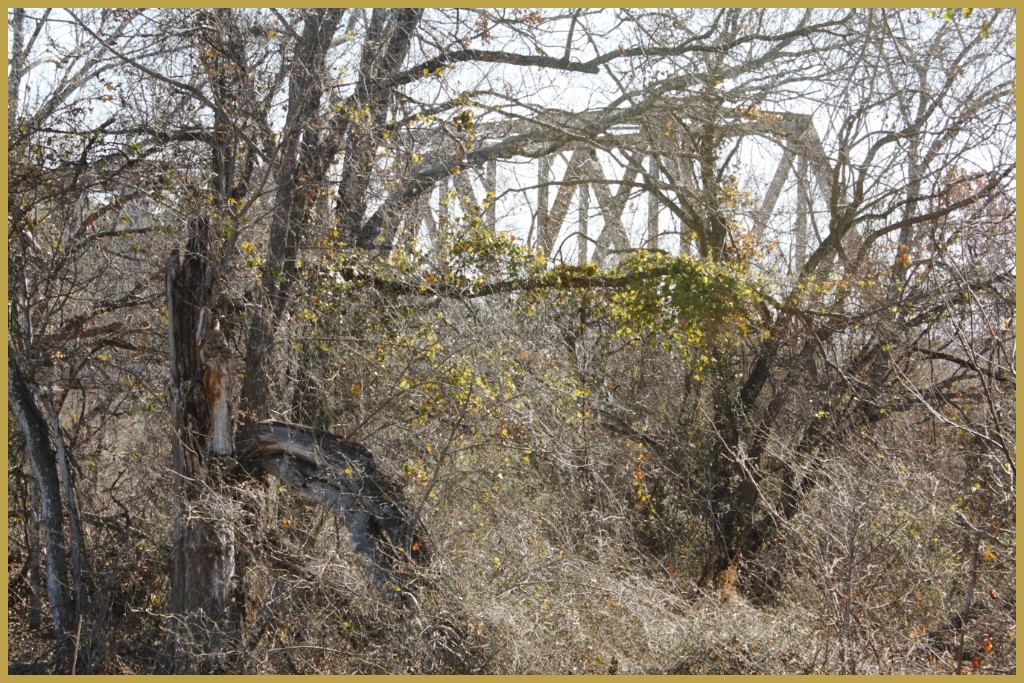
Another Austin & northwestern Bridge (2017)
*A “drummer” is the colloquial name for an itinerant salesman who traveled the rails and stage lines, and in time the roads, looking to sell his ware. The name, “drummer,” comes from the habit of many early itinerant salesmen to beat a drum to announce their presence.
"The Drummer" appeared in the April 24, 2017 issue of The Trackside Photographer.