Christian Universalism

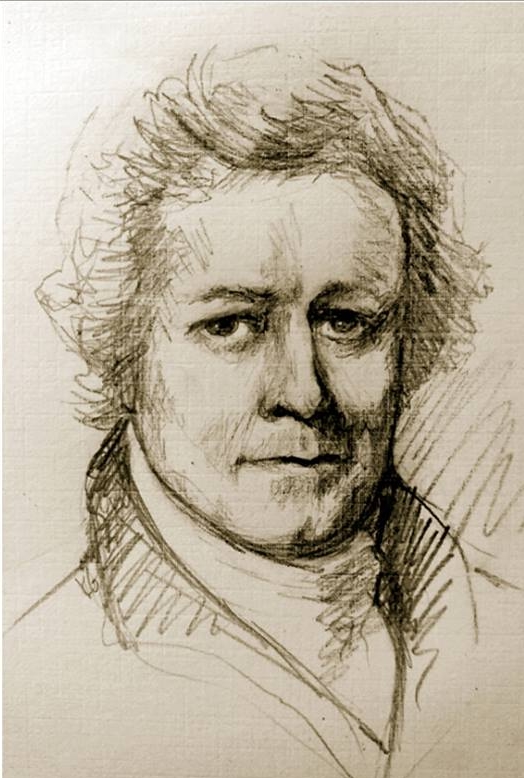
George de Benneville
(1703-1793)
When we speak of George de Benneville as the “Father of Universalism in America,” in many ways we are speaking of specific form of universalism that, as we will see, is often different than some versions of universalism that exist today, especially those who seek to tie universalism into a traditional Christian understanding.
George de Benneville taught that no church is totally pure in all things, there is some truth to be found in each, and because of this we should be able to unite in love in spite of the differences. In fact, he believed that in time, all truths would unite through, and in, love He held this not only for Christian sects or denominations, but for all faiths as well. He had no desire to start another denomination, a universalist one.
On the other hand, John Murray, “Father of the Christian Universalist Church” said regarding other denominations, “we never shall be able to form a friendly union with any one denomination of Christian [confessors of faith].”
De Benneville arrived in America in 1741, the same year Murray was born. He preached universalism for 39 years before Murray arrived on American shores, making him the “Father of Universalism in America.”
A highly educated person. De Benneville wrote volumes of both spiritual and medical essays, including a seven-volume treatise on medical therapies of his day. He worked as a schoolmaster and a medical doctor both in England and America. In America he established ministry to Native Americans that focused on t heir health and education. Before he came to America, he was an influential throughout Europe in several fields, especially education and medicine. So much so that Louis XVI of France sent a delegation urging him return to France. Refusing, he then set about the publication and translation of papers on universal salvation. These papers played no little part in the growth of universalism in America.
Of particular influence was de Benneville’s English translation of Paul Siegvolck’s, The Everlasting Gospel (1700), which was published in 1753. The Everlasting Gospel (PDF ) rejected the election of only a few to salvation and the idea of eternal damnation in favor of the restoration of t he soul to full harmony with God because of God’s everlasting love.
Theologically, in addition universal salvation, de Benneville rejected baptism and Communion (“The Lord’s Supper “) as sacramental, while affirming the Gospel as an experience of inward revelation. We wrote, ““Catholic sacraments and Protestant dogmas cannot make men Christ-like.” Influenced by Jacob Boehme de Benneville was a strong believer in “spiritual conversion,” rather than creedal (doctrinal) conformity.
"Dr. George de Benneville: Teacher, Healer and Preacher of Universalism in the Oley Valley, Pennsylvania" by Nelson Simonson & John Morgan.
The Everlasting Gospel, Siegvolck, Paul (1753 English translation) PDF Copy